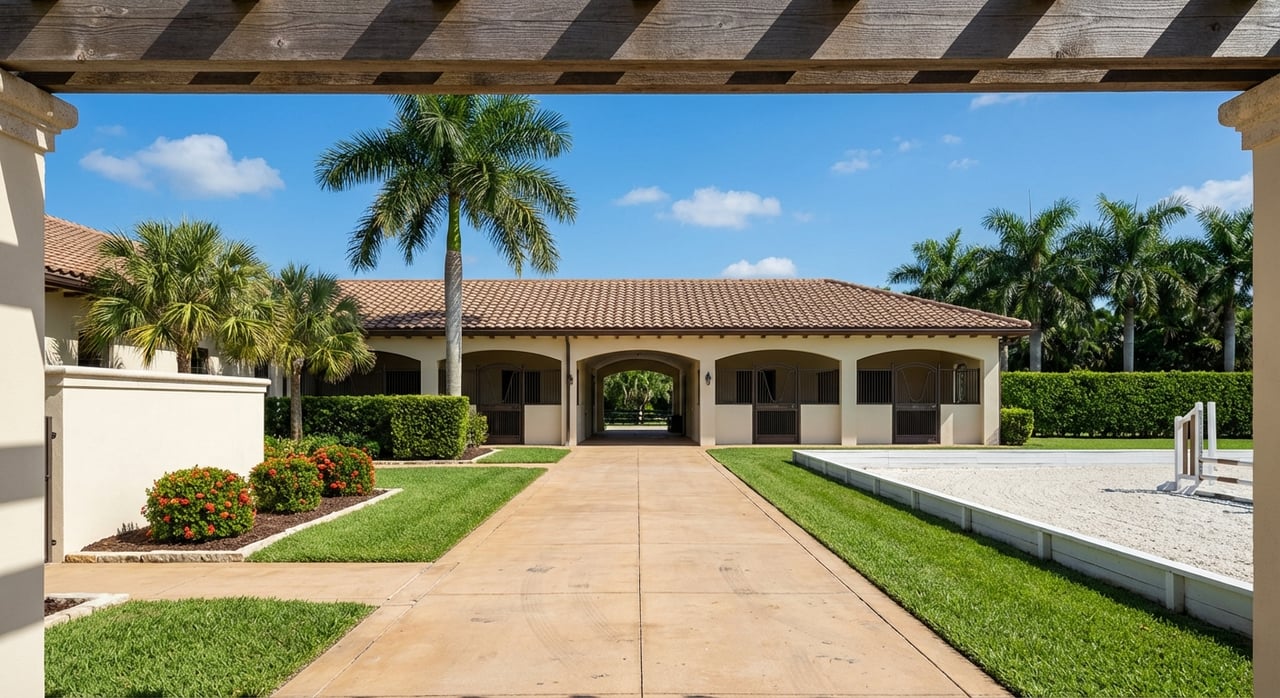
Thinking about selling your Wellington barn, farm, or equestrian estate this year? If you time your launch to overlap with Wellington’s show and polo season, you put your property in front of the largest, most qualified buyer pool of the year. In this guide, you’ll learn the key dates, how seasonality changes buyer behavior, the pros and cons of listing before, during, or after season, and a practical prep timeline tailored to equestrian properties. Let’s dive in.
Why show season timing matters
Wellington’s winter circuit is a magnet for equestrian buyers. The Winter Equestrian Festival (WEF) runs for multiple weeks, drawing riders and owners from across the country and around the world. For the upcoming 2026 season, WEF is scheduled for December 31, 2025 to March 29, 2026, with expanded competition and a record prize pool noted by the organizers. You can confirm the season overview and enhancements through Wellington International’s 2026 season update and main site resources:
- Review the 2026 competition season enhancements and prize money at Wellington International’s news page: 2026 winter competition season.
- Explore the venue and visitor info at the Wellington International site.
Dressage buyers arrive in parallel. The Adequan Global Dressage Festival (AGDF) runs at Equestrian Village during the same winter months. While show jumping and dressage anchor the core season, polo extends the buyer window into spring. The National Polo Center’s high-goal calendar culminates with the U.S. Open Polo Championship final in 2026 on April 26, which helps keep luxury buyers in town longer. See the date context on the World Polo Tour schedule.
The scale is substantial. According to the Palm Beach County Sports Commission, recent seasons generated about 180 million dollars in direct horse-related spending, 57.1 million dollars in direct visitor expenditures, and 161,061 paid room nights across hotels and vacation rentals. Competitors and teams stayed an average of roughly 67 days, which means many qualified buyers are in the area for weeks at a time. That dynamic gives you repeated in-person showing opportunities if your property is live during the heart of the circuit. You can review these figures in the Sports Commission’s coverage of WEF’s economic impact: economic impact for the Palm Beaches.
Peak buyer window in Palm Beach County
Local market reporting and agent guidance align on a clear pattern: buyer traffic rises from late November through March and often into April, especially for lifestyle and second-home segments. During these months, well-prepared listings tend to see more showings and, in many cases, faster market movement than in the off-season. The concentration of show and polo attendees makes January through March especially active for equestrian properties.
Summer can be quieter for this niche. As hurricane season approaches in June, travel patterns and insurance logistics can add friction. If your property’s strongest appeal is to WEF, AGDF, and polo-focused buyers, being active during the circuit gives you the best chance to capture them while they are in town.
Decide when to list: pros and cons
List before season (October to December)
- Pros
- Your property is live as riders, owners, and trainers arrive and plan multi-week tours.
- You can catch buyers who want a quick move-in before the calendar peaks.
- If prep is complete by late fall, you can leverage early-season momentum.
- Cons
- Some seasonal inventory also appears, adding competition in select price bands.
- You need to finish repairs, staging, and permits earlier.
List during season (January to March)
- Pros
- Maximum in-town buyer density and the highest chance of in-person showings.
- Many prospects are available for repeat visits over several weeks, which can speed decisions.
- Strong visibility during headline weeks and special events.
- Cons
- More listings also hit the market in this window.
- Scheduling inspections and appraisals can take longer on busy event weeks.
List after season (April to June)
- Pros
- Less competition from new seasonal listings.
- You can attract buyers who toured during season but did not secure a match.
- Extra time to complete upgrades and present a turnkey package.
- Cons
- Fewer out-of-town equestrian buyers remain on the ground.
- Hurricane season begins June 1, which can affect insurance and closing logistics. You can confirm season dates with the National Hurricane Center.
What equestrian buyers look for
Prepare 8 to 12 weeks before you list. Focus on the technical details show buyers care about and document everything clearly in your disclosures and marketing.
- Barn and stalls. Confirm stall count, recent repairs, aisle and wash-rack condition, plus tack and feed storage. Photograph each area clearly.
- Arena footing and maintenance. Specify composition, grooming schedule, irrigation or watering system, and any recent upgrades.
- Fencing and turnout. Note paddock acreage, cross-fencing, shade and shelter details.
- Drainage and grading. Florida rains make drainage critical. Provide any available reports or documentation.
- Permits and zoning. Include allowed uses and any special approvals or non-conforming notes.
- Utilities and capacity. Outline septic, well or municipal water, and electrical capacity for washers, fans, and heat lamps.
- Insurance-related reports. Florida buyers often ask for wind-mitigation, four-point, and WDO/termite inspections. Having them ready can streamline underwriting.
- Title and access. Document easements, trailer turn radiuses, gate widths, and parking for rigs.
Align your marketing with the WEF calendar
Meet buyers where they are by syncing your launch and events with WEF’s weekly rhythm. A clean, complete listing package helps you stand out during busy weeks.
- Visuals and specs. Use professional photography, drone aerials to show acreage and proximity to the showgrounds, and detailed floor plans and barn layouts. Include a downloadable spec sheet that highlights stall capacity, footing, turnout, and any income potential.
- Property website. Centralize photos, diagrams, reports, and disclosures in one easy link for traveling buyers.
- Broker and private previews. Time them around high-attendance weeks, Grand Prix weekends, and Saturday night programs. You can reference weekly schedules using Wellington International’s prize lists and schedules.
- Showing windows. Offer flexible slots that respect ring times and show schedules to make tours easy for riders and trainers.
Sample timelines you can follow
Below are two realistic paths based on the 2026 WEF calendar. Adjust milestones to your property’s scope and vendor availability.
A) Launch to capture the start of WEF
Target live date: first week of January 2026 (WEF begins December 31, 2025)
- 12 to 16 weeks out (mid-September to mid-October)
- Order surveys and gather permits or permit histories.
- Schedule contractors for any barn, arena, or roof work.
- Map a light staging plan for house and barn.
- 8 to 10 weeks out (November)
- Complete major repairs and footing touch-ups.
- Order general, WDO/termite, and wind-mitigation or four-point reports where relevant.
- 4 to 6 weeks out (early December)
- Deep clean, landscape, and schedule drone plus twilight photography.
- Build your property website and finalize spec sheets and floor plans.
- 1 to 2 weeks out (mid-December)
- Upload disclosures and reports, finalize your MLS package, and schedule a broker open during the first two weeks live.
- Set showing windows aligned with key WEF weeks.
- Go live midweek (Wednesday or Thursday)
- Build momentum into weekend show days and track feedback closely in the first two weeks.
B) Need more time? Launch after season
Target live date: April to May 2026
- 20 to 24 weeks prior (November to December 2025)
- Tackle major site work and barn upgrades before the winter circuit.
- 12 weeks prior (January to February 2026)
- Fine-tune staging and invite serious buyers in town for season to preview by appointment.
- April launch
- Reconnect with buyers who toured during season, highlight completed upgrades, and lean on digital assets for out-of-town decision makers.
Pricing, days on market, and closings
Season concentrates demand. Well-prepared, correctly priced listings often see stronger activity from late November through March compared to summer months. Use a seasonally relevant CMA and watch competing inventory in your specific price band.
Plan your closing timeline with the calendar in mind. Mortgage-backed transactions commonly take about 30 to 60 days, while cash can move faster. Given the event calendar and vendor availability during season, a 45-day target for financed deals is a practical planning assumption. For a plain-English overview of closing timelines, see this summary on how long closing typically takes.
Bottom line
If your property is built for the Wellington buyer — stalls, turnout, arena footing, and proximity to the showgrounds — you get the biggest lift by listing as the circuit begins and staying live through the core weeks. The WEF and AGDF calendars, plus spring polo, bring qualified buyers to Palm Beach County for weeks at a time. When your prep is complete and your launch is synced to the season, you maximize exposure and give serious buyers the access they need to act.
If you want a tailored plan for your barn, farm, or equestrian estate, connect with Darlene Streit PA. Our concierge team pairs deep Wellington expertise with strategic, in-season marketing to help you secure the best result.
FAQs
What months are best to list a Wellington equestrian property?
- Late November through March is the prime window, with activity often extending into April due to polo. These months overlap WEF and AGDF, which concentrate qualified, in-town buyers.
How do WEF and AGDF dates affect showings and offers?
- During season, riders, owners, and trainers are in Palm Beach County for extended stays, which supports repeat showings and faster decisions. The 2026 WEF season runs December 31, 2025 to March 29, 2026.
Should I finish barn and arena upgrades before listing in season?
- Yes. Document stall counts, footing specs, drainage, fencing, and recent repairs. Having wind-mitigation, four-point, and WDO/termite reports ready can reduce friction for buyers and insurers.
Is listing after season still worth it for equestrian sellers?
- It can be. You face less competition and can capture buyers who toured during season. Expect fewer out-of-town show buyers, so rely more on targeted outreach and strong digital materials.
How long does closing take if I accept an offer during season?
- Many financed deals close in about 30 to 60 days, while cash can be faster. Aim for 45 days for financed transactions during peak months to navigate busy vendor schedules.
Do I need to consider hurricane season when timing a spring or summer sale?
- Yes. Atlantic hurricane season runs June 1 to November 30, which can affect insurance, inspections, and scheduling. You can confirm dates and guidance at the National Hurricane Center.